
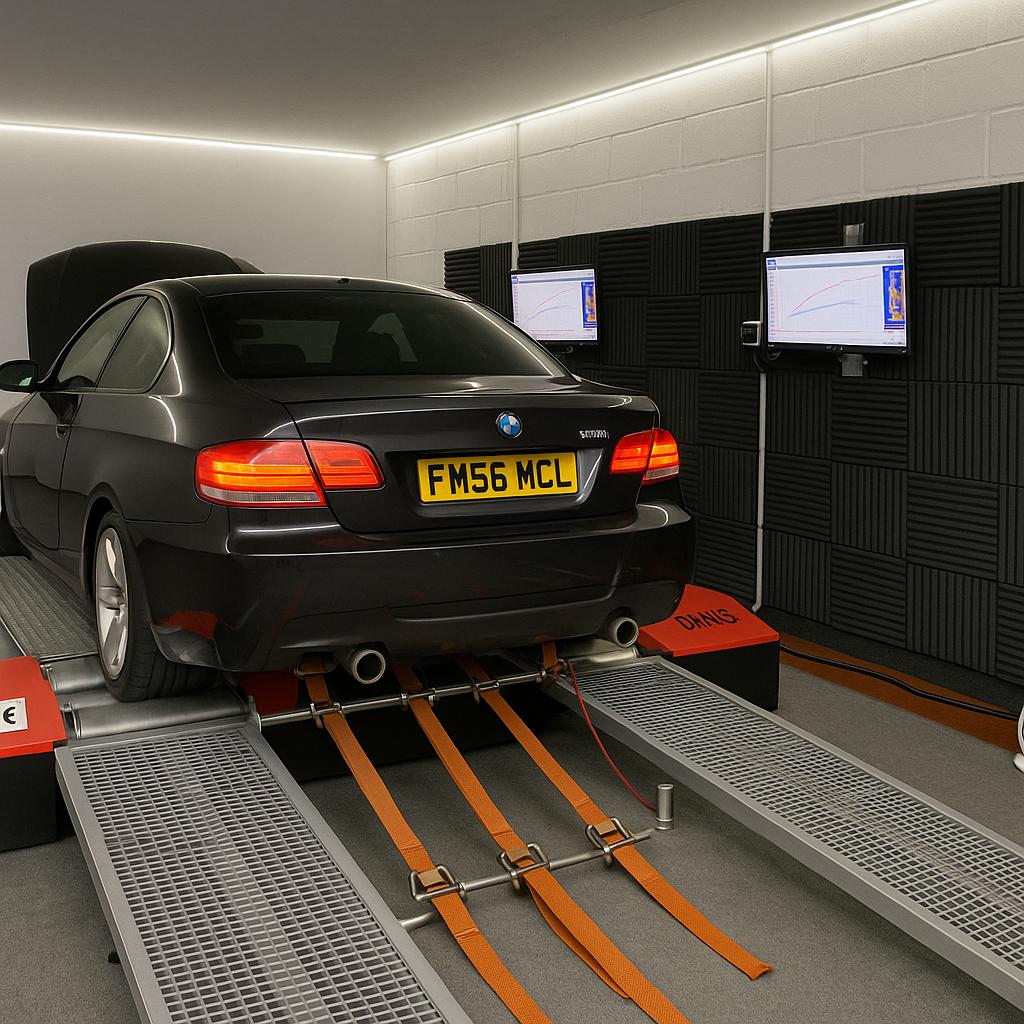
Car people argue about this all the time. The dyno or the road. Which one really shows how a car performs? Depends on who you ask. Both have pros. Both have drawbacks. Let’s run through it.
What a Dyno Really Shows?
A dyno machine is basically a giant set of rollers. The car stays in place, the tires spin, and the system measures horsepower and torque. Clean numbers. No wind. No potholes. No traffic. It’s all controlled. Easy to repeat, which is why tuners love it.
But. Real driving isn’t controlled. Air drag, tire slip, and even a hot day can change the way a car feels. A dyno can’t show that. It’s numbers on paper, not the whole picture.
Road Testing in Action
Take the car out on the street—or track—and it’s a different story. Acceleration, braking, handling. You feel it in the seat. That’s what drivers care about anyway.
Still, road testing can get messy. Different pavement. Different temps. Even traffic lights mess with results. You can’t run the same test over and over and expect exact numbers. Unlike the dyno, it’s not about precision. It’s about feel.
Lining Them Up
- Dyno strengths: repeatable, safe, pure data.
- Dyno weak spots: not the real world.
- Road test strengths: shows how the car actually drives.
- Road test weak spots: too many variables, hard to measure.
Truth be told, most serious shops use both. The dyno machine to dial in the numbers. Then a road run to check if the numbers match real-world driving. One without the other? Feels incomplete.
So, Which Wins?
Depends what’s important. Want raw data? Dyno. Want to know if your car pulls hard in the real world? Road test. Honestly, the best results come from combining the two. Paper and pavement. Numbers and feel. That’s the full story.